How to Rent an Apartment in Japan: A Step-by-Step Guide
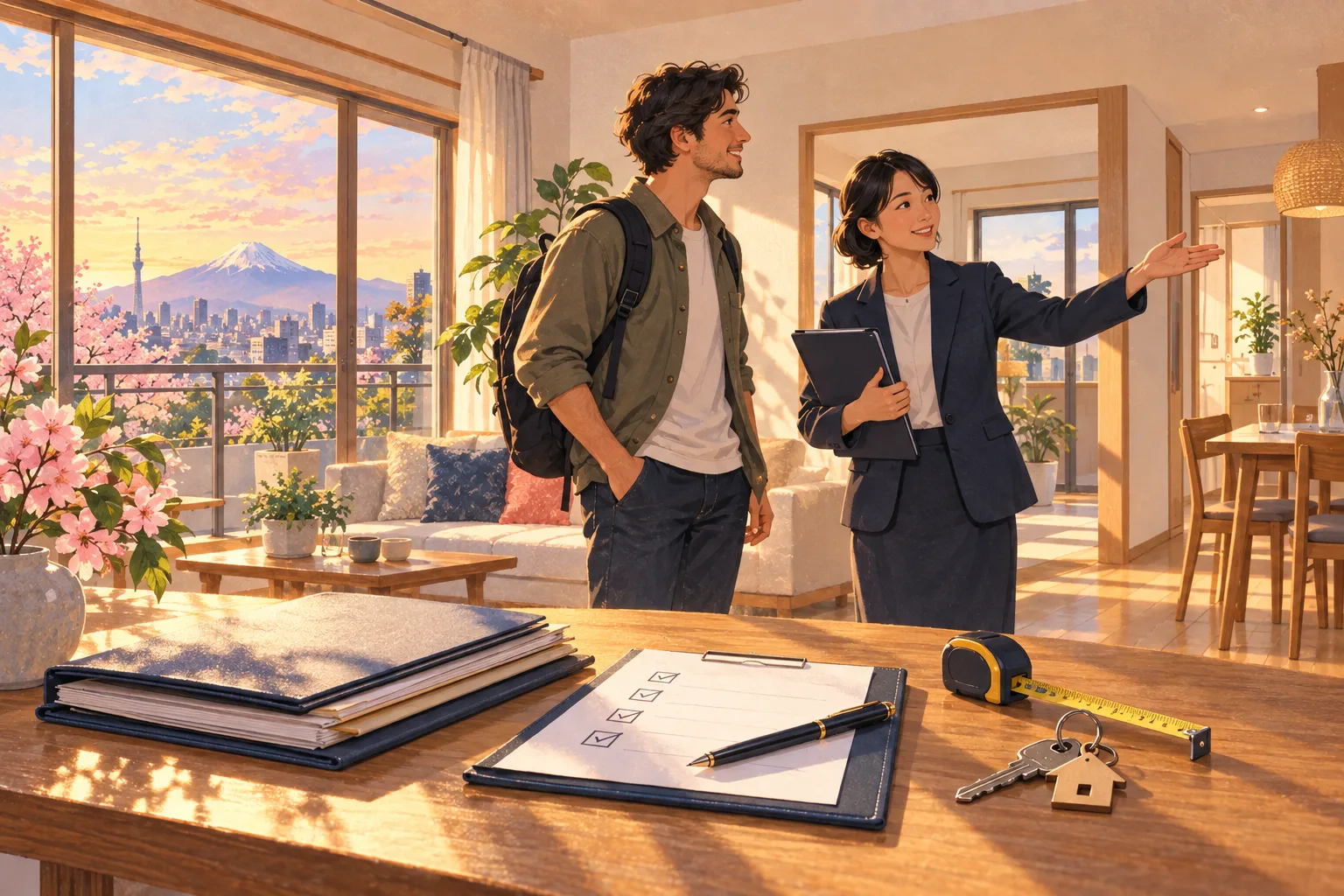
Renting an apartment in Japan follows a set of basic steps, and some of them may be different from what you are used to at home. This guide walks you through the process, from setting a budget to getting the keys, and tells you what to prepare at each step.
1. Set your budget
Think about two amounts: the monthly cost (rent plus the management fee) and the move-in cost. A common guideline is to keep rent to about a third of your monthly income, but choose what works for you. Moving in often costs several months of rent, so check that you have enough savings. To learn more, read our guide: How Much Does It Cost to Move Into an Apartment in Japan?
2. Choose an area
Start with where you will work or study, and check the door-to-door travel time. Rent usually goes down as you move away from major stations and stations where express trains stop. Walk around the area if you can, both during the day and at night.
3. Search for apartments
You can search on property websites or visit a real estate agent. Many landlords do not accept foreign tenants, and the listing often does not say so. To save time, look for agents that work with foreigners, and ask early whether each place accepts foreign tenants.
4. Contact an agent
Tell the agent your budget, preferred area, move-in date, and how long you plan to stay. Also tell them your job or school and your status of residence. This helps them find places where you are likely to pass the landlord’s screening (shinsa).
5. View the apartment
A viewing (naiken) is usually free. Some agents also offer online viewings. When you visit, check:
- Sunlight, noise from roads or trains, and the thickness of the walls
- Water pressure, the air conditioner, and cell phone signal
- Where the garbage area is, and whether it is kept clean
- Any damage, such as stains or scratches. Take photos.
6. Apply
When you find a place you like, you fill out an application form. You usually need:
- Your residence card and passport
- Proof of income, employment, or enrollment (for example, a certificate of employment or a student ID)
- A Japanese phone number
- An emergency contact
7. Wait for screening
The landlord checks your application, often together with a guarantor company. This often takes a few days to about a week. They may call you to confirm your details. If you do not speak Japanese, ask the agent to help, or ask whether the guarantor company offers support in your language. To learn more, read our guide: Do You Need a Guarantor to Rent in Japan? Guarantor Companies Explained.
8. Listen to the explanation of important matters
Before you sign, a licensed real estate specialist must explain the important points of the contract to you. This is called the explanation of important matters (juyo jiko setsumei), and it is required by law. For rentals, it can also be done online. Ask about anything you do not understand, especially:
- The contract length and how to renew it
- How much notice you must give to move out, and any fee for leaving early
- What you pay when you move out, such as cleaning fees
- Rules about pets, smoking, and guests
Japan’s Ministry of Land, Infrastructure, Transport and Tourism (MLIT) publishes sample rental contracts and checklists in several languages. You can use them to understand your contract.
9. Sign the contract and pay
You sign the contract and pay the move-in costs, usually by bank transfer, before you get the keys. Keep copies of everything you sign.
10. Get the keys and move in
- On the first day, take photos of every room, including any damage that was already there. This helps when you move out.
- Set up electricity, gas, water, and internet. Gas usually needs someone to come and turn it on, so book a visit early.
- Make a list of everything to do around moving day with our moving checklist.
- Register your new address at the city or ward office within 14 days of moving in. To learn more, read our guide: Your First Weeks in Japan: Address, Phone, and Bank Account in the Right Order.
Not ready for all this?
If you have just arrived, or you cannot pass screening yet, a share house is an easier first step. In a share house, most of these steps are much simpler, and rooms are furnished. To compare, read our guide: Share House vs. Studio Apartment in Japan: Which Is Right for You?
Sources
- MLIT, Support for Foreigners Moving into Private Rental Housing (multilingual guides, sample contracts, and checklists). mlit.go.jp (Japanese)
- Real Estate Brokerage Act, Article 35 (explanation of important matters). e-gov.go.jp (Japanese)


